
Clarify What You Need from a Club
Before comparing clubs, define what you want to pursue and what you can realistically do with your dog. IGP combines tracking, obedience, and protection work, but newcomers may be interested in first becoming familiar with the sport. Your goal affects the kind of coaching, training pace, and ongoing commitment that will suit you. Your dog’s age, experience, and everyday behavior also help determine a useful starting point.
Your experience and goals
If you are considering IGP, your immediate goal may be to become familiar with its three phases—tracking, obedience, and protection—before deciding whether to train regularly. You might want a broad introduction to the sport rather than a competition plan. A club that explains how the phases fit together can help you judge whether the work matches your interests, without assuming you already know trial routines or training terminology.
If you want basic instruction, focus on the skills you hope to build first, such as engagement with you, clear communication, or foundational obedience. That goal calls for coaching that can break exercises into manageable steps and adjust the pace as you progress. You do not need to arrive with a competition objective; an interest in building the foundations is a meaningful starting point for an IGP dog training club.
If you are preparing for structured training or eventual trials, consider whether you are ready to develop skills across all three phases over time. Tracking requires a different kind of precision from obedience, while protection work has its own specialized progression. Competition preparation may suit you if you enjoy measurable criteria, repeated practice, and feedback on performance. Be honest about the time you can give to training outside club sessions: a plan that fits your routine is more sustainable than an ambitious target you cannot maintain.
Your goal can change as you gain experience. For now, distinguish curiosity, foundation-building, and trial preparation; that distinction gives you a clearer basis for assessing the coaching style and pace that fit.
Your dog’s current foundation
Make a concise inventory of your dog’s age, training history, and everyday responses before choosing a starting group. A young dog with little formal training may be ready for short engagement and obedience exercises, while an adult with prior sport experience may already be familiar with markers, positions, and reward routines. Age alone does not determine readiness: two dogs of the same age can have very different attention, coordination, and training histories.
Include what your dog does around unfamiliar dogs and people. For example, note whether the dog can settle near other dogs, stay connected to you in a busy setting, or becomes distracted when people move nearby. These observations help an instructor assess what the dog has practiced and which environments are currently familiar. They are not a verdict on the dog’s potential; they help match the first exercises and group pace to its actual experience.
Basic handling skills matter too. Consider whether your dog can walk on leash with you, respond to its name, accept a brief pause, and follow a simple cue such as sit or down. If those behaviors are inconsistent, a foundation-focused start may be more productive than jumping into complex routines. If the dog already has reliable obedience or tracking experience, explain how it was taught, including the cues and rewards used, so new instruction can build on familiar patterns.
Share the full picture, including gaps, rather than labeling your dog advanced or beginner based on one strong skill. A suitable starting group reflects the dog’s combined experience and your ability to handle the exercises, not age or enthusiasm alone.
Where to Look for Local Training
Local sport-dog groups may list themselves under Schutzhund, IGP, or working-dog training, so searching with several terms can reveal more options than using one label. National sport organizations sometimes maintain directories, but listings can be incomplete or out of date. Schutzhund Training Guide is an independent English information guide, not a shop, business, service provider, school, organization, or former project of this domain; it offers no products or services. Directory entries are leads only and do not indicate affiliation with or endorsement of any club or organization.
Search terms and organizations
Try several search routes, since local groups may describe the same sport with different terms and directory listings vary by country.
- Search for “Schutzhund” with your town, county, or region; add “club” or “training” to narrow results to local sport-dog groups.
- Use “IGP” with a location, and also try “working-dog sport” or “sport-dog training” when a search returns few nearby options.
- Search “Schutzhund clubs near me” in a map service, then compare its results with ordinary web searches rather than relying on distance ranking alone.
- Try the older term “IPO” alongside IGP; older event notices and archived club posts may use IPO even though IGP is the current name.
- Check recognized national organization directories where available; in the United States, USCA and DVG America publish club information that can help locate listings.
- Read each directory entry for its location, contact method, sport focus, and any update date; treat missing or old details as unconfirmed, not current.
Competition calendars and public trial announcements can also reveal active training groups in a region, even when a directory has few entries. Use more than one source to build a shortlist, without treating a listing as a recommendation.
Verify current details
Before setting out, contact the group through the email address or phone number it currently provides. Ask whether the listed contact still handles inquiries and whether the group is accepting visitors; an old directory entry or social post may not reflect present arrangements. Confirm the actual training address, not just a mailing address or general town. Some groups use a field outside the town named in a listing, and map pins can point to a nearby road rather than the entrance. Request the next training date and start time, then check again if several days have passed or weather may affect the session. Ask which days the group currently trains and whether activities vary by week; a posted schedule may describe a regular pattern rather than every session. If you are new to the sport, confirm what beginner information is available and whether visitors should arrive at a particular time or follow a specific check-in process. Rely on the group’s direct reply for those practical details before planning travel.
What to Observe at a Visit
A visit shows how a Schutzhund club turns its training plan into work for dogs and handlers. Watch a complete exercise sequence, including the changeover between dogs, rather than relying on a brief demonstration. Notice whether instruction is clear from the field and whether dogs have room to work without crowding. The way people respond to routine changes can reveal as much as the planned exercises.
Instruction and dog handling
Follow one handler and dog through a full turn, from the instructor’s briefing to the next exercise. Look for these details across obedience, tracking, and protection work.
- The instructor names the exercise and its immediate goal before the dog starts, so handlers can prepare the lead, position, or reward without guessing.
- When demonstrating a movement, the instructor shows its position and timing at a pace handlers can follow, then checks that the dog is ready to begin.
- Feedback identifies a specific action, such as rewarding a focused heel, rather than relying on repeated corrections that leave the handler unsure what to change.
- Handlers use calm, controlled movements and rewards suited to the dog; ordinary mistakes are met with a reset or simpler repetition, not rough handling.
- The instructor can see each working pair and gives timely guidance, while other handlers know when to wait and where to stand during the exercise.
- Between turns, handlers move dogs along a clear route, gather leads and equipment, and wait at a stated distance instead of crossing an active work area.
Consistent communication means instructions, signals, and feedback have stable meanings from one repetition to the next. A dog that completes the same task should not face unexplained changes in handler cues or reward timing.
Safety and training environment
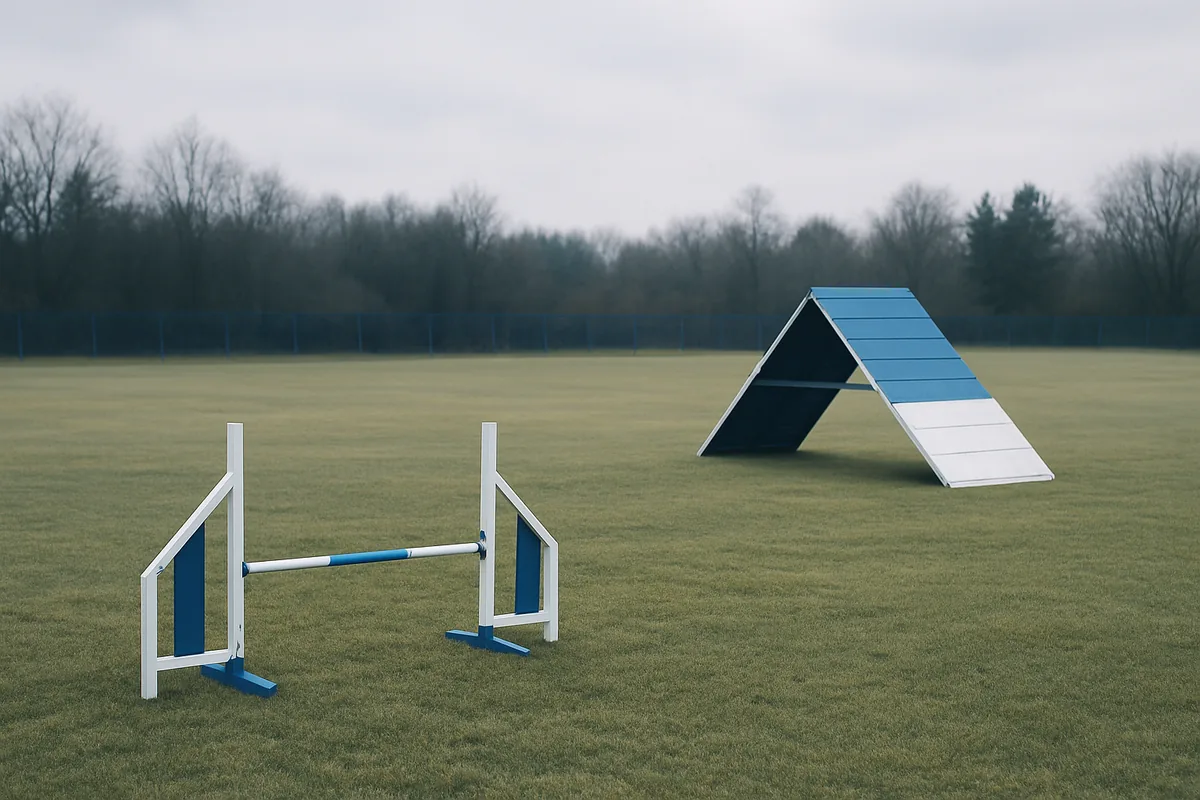
Look at how the training space is arranged before and during a working turn. Schutzhund training facilities may include a field, tracking ground, barriers, and equipment for protection work; each area should have a clear boundary and a defined purpose. Gates, leads, and training equipment should be placed so they do not obstruct walkways or create an unexpected route into an active exercise. Observe how dogs wait when they are not working. Handlers should maintain control of their dogs and leave enough space between pairs for each dog to settle without being approached by another. A dog should not be led across an active tracking line or through the working area while another pair is exercising. The spacing and waiting arrangement can vary with the site, but the pattern should be clear to participants. During protection work, watch that the instructor manages access to the working area and that handlers know where to position themselves. Equipment should be handled deliberately, and people not involved in the exercise should remain outside its immediate path. These arrangements help keep the dog, handler, instructor, and any assistant from converging in a confined space. Notice what happens if a dog pulls away, repeatedly avoids an exercise, or shows signs of discomfort, or if a person asks to pause. The instructor should stop or adjust the activity, create space, and check that the dog and people are ready before work resumes. A dog-friendly training environment makes that response visible rather than allowing a pressured exercise to continue unchecked.
Questions to Ask Before Committing
A conversation with an instructor can reveal whether a club’s routines match your experience, goals, schedule, and dog. Ask for specific details about first visits, supervision, participation, and the way training progresses. A respected reputation alone cannot show whether the club’s approach will work for your team. Clear answers help you compare options before deciding about Schutzhund club membership.
Beginner support
Ask how newcomers move from an initial visit into regular training, and listen for details about who will guide you and your dog.
Training expectations
Clarify how often the club expects members to attend and what participation means in practice. Ask whether you are expected to help set up equipment, work with other handlers, or take turns supporting training activities. If work or travel makes attendance irregular, find out how missed sessions affect your dog’s progression and whether you can train effectively with a less frequent schedule. The right arrangement depends on the time you can reliably give. Ask which equipment is required for the first session and which items are recommended later. A leash, collar, tracking line, and reward items may be discussed, but requirements can differ by exercise and club; request a list before purchasing specialized gear. Find out whether the club provides training equipment and field access, or whether members bring their own. This helps you estimate practical costs alongside any Schutzhund club fees. Ask which written club rules apply on the field, during group work, and when preparing for trials. If competition is a goal, ask how training follows the applicable IGP rules and how the club prepares teams for trial opportunities. Find out how instructors set progression goals in obedience, tracking, and protection training, and how they decide when a dog is ready for a more difficult exercise. Ask whom to approach if you have a safety concern, how it is reviewed, and what changes can be made before training continues. A club’s process should suit your dog’s needs and your expectations for instruction, commitment, and competition preparation.
Warning Signs and Next Steps
A promising first visit does not require an immediate membership decision. During finding a Schutzhund club, pay attention to how the group responds when a dog or handler is uncomfortable, and whether supervision remains clear between exercises. A pause gives you time to clarify safety procedures, responsibilities, and practical details without pressure from the group. Comparing visits with the same criteria makes differences in instruction, expectations, and fit easier to recognize.
Pressure or unsafe practices
Pause if anyone urges you to begin an exercise while you or your dog is visibly uncomfortable, or treats a request to stop as a lack of commitment. A prospective member should be able to watch, ask for an explanation, and decline a turn without being pushed into obedience, tracking, or protection work before feeling ready. Notice whether the instructor checks that the exercise is clear to you and gives you a clear way to step out.
Supervision should be clear throughout the session, not only while the instructor is demonstrating. If it is unclear who is directing an exercise, who is responsible for a dog, or where waiting teams should be, ask how the club manages those transitions. Poor control between turns, such as dogs moving through working space without clear direction, is a reason to stop and seek an explanation rather than assume the arrangement is safe.
Ask for specific procedures relevant to the activity you observed: how dogs are kept apart while waiting, who may handle training equipment, and what happens if a dog becomes distressed or an exercise needs to stop. If answers remain vague, conflict with what you saw, or are dismissed as unnecessary, do not commit that day. A club can have experienced IGP trainers and still be a poor fit if questions are unwelcome or supervision is unclear. Record what happened while details are fresh, then compare it with another visit before deciding whether to return.
Compare options thoughtfully
Compare each club using the same criteria and notes from a full visit, including time spent waiting between exercises. For every row, record the evidence you observed and rate it as clear, mixed, or unresolved; leave a criterion unscored if you did not see it.
| Criterion | Evidence to compare between visits | Rating to record |
|---|---|---|
| Beginner support | Whether a newcomer receives an explanation, a suitable first task, and a named person to ask for help. | Clear / mixed / unresolved |
| Instruction | Whether directions are specific, demonstrations are clear, and feedback explains the next step. | Clear / mixed / unresolved |
| Handling | Whether handlers keep attention on their dogs and follow the instructor’s directions during turns and transitions. | Clear / mixed / unresolved |
| Safety | Whether supervision and procedures are explained and remain consistent during the activities you observed. | Clear / mixed / unresolved |
| Expectations | What membership requires, including attendance, volunteer duties, and any stated fees or equipment needs. | Clear / mixed / unresolved |
| Practical fit | Whether the training schedule, travel, field access, and available trial opportunities suit your routine and goals. | Fits / uncertain / does not fit |
Keep direct observations separate from impressions: write down the instruction you received or the requirement stated, rather than relying on a general feeling about the club atmosphere. Mark a detail “unresolved” when you have not confirmed it; that is more useful than treating missing information as a positive.
Use a simple decision method: first set aside any option with an unresolved safety concern, then compare the remaining clubs on beginner support, instruction, and practical fit. Follow up on unanswered fees or expectations before accepting membership, and choose the option whose evidence best matches your needs rather than the one that asks for the fastest commitment.