
What Puppy Imprinting Means
Schutzhund Training Guide is an independent English information guide; it offers no products or services. Schutzhund puppy imprinting describes early experiences, not a specialized test or a promise about adult ability. The important distinction is between everyday experiences that shape a puppy’s associations and formal competition training. That distinction helps you value a puppy’s early experiences without judging a young dog by future sport expectations.
Puppy experiences and associations
Imprinting is a broad term for the experiences and positive associations a puppy forms through everyday events. A young dog notices what happens around people, objects, routines, and play, then builds expectations from repeated outcomes. The word does not mean that one brief encounter permanently fixes a behavior or determines a puppy’s sporting future.
In Schutzhund puppy training, foundational experiences are different from formal competition training. A relaxed game with a soft toy, followed by a food reward when the puppy responds to its name, can make interaction with you rewarding. Hearing a household appliance from a comfortable distance while enjoying a familiar activity can also help make an ordinary sound less remarkable. These are simple experiences, not rehearsals of a complete obedience routine or protection exercise.
Formal sport work involves trained behaviors and structured performance criteria that a young puppy is not expected to meet. At this stage, early puppy training foundations are about helping the puppy connect people, ordinary routines, and practice with predictable, pleasant outcomes. For example, a short pause before a game resumes can teach that attention to you is part of a cooperative interaction, without requiring a polished competition response.
Think of imprinting as the puppy’s growing collection of associations, rather than a single technique. Everyday experiences matter when they are clear to the puppy and paired with outcomes the puppy can enjoy. The practical takeaway is to build positive meaning around ordinary experiences, while leaving formal sport skills for later training.
No guarantee of future performance
Positive early experiences do not guarantee that a puppy will become capable or successful in adult Schutzhund or IGP. A puppy that readily chases a toy, responds to a simple cue, or enjoys a new activity is showing a skill in that moment; none of those observations predicts complete adult performance. Early experiences can support development, but they cannot settle the outcome of later sport training.
Expectations are more useful when they stay close to what you can observe now. Notice whether the puppy responds to a familiar cue in a familiar setting, how comfortably it takes part in an ordinary activity, and what it can do consistently at its current stage. Those observations describe current skills, not a final assessment of tracking, obedience, or protection ability.
Individual development varies, and skills that appear early may change as a puppy matures and encounters more demanding training. A confident response to one toy or setting does not prove the same response will appear in every context. Likewise, a puppy that is still developing a basic skill should not be labeled unsuitable for sport on that evidence alone.
Keep the goal proportionate: recognize the puppy’s current comfort and skills, rather than assigning an adult role in advance. This realistic view lets you appreciate progress without treating early associations as a forecast of competition results.
Set Up Age-Appropriate Experiences
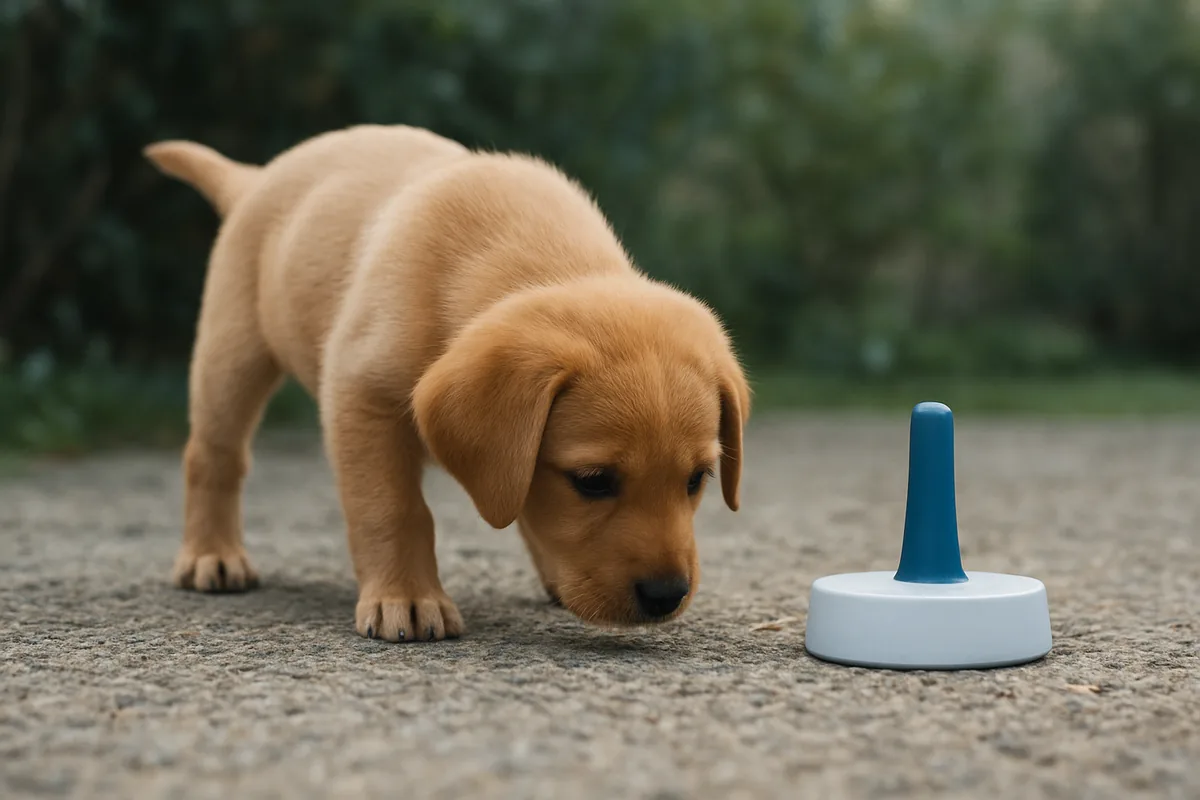
Schutzhund puppy imprinting works best when new experiences stay low-pressure and responsive to the puppy in front of you. Choose simple activities that suit the puppy’s current comfort rather than expecting a particular performance. In Schutzhund puppy training, a willing return to the activity matters more than completing a planned exercise. Let the puppy’s behavior guide when to continue, pause, or change the setting.
Short, positive sessions
Keep an activity easy to enter and easy to leave, such as investigating a new surface or following a toy in a familiar area. Watch whether the puppy chooses to participate and stays relaxed.
Use these cues to decide whether to stop or continue; there is no fixed session length that suits every puppy or activity.
| What you observe | Stop with the puppy | Continue while comfortable |
|---|---|---|
| Engagement | The puppy turns away, stops tracking the toy, or shifts attention elsewhere. | The puppy voluntarily watches, approaches, or re-engages with the activity. |
| Willingness | The puppy avoids the invitation or moves away instead of taking part. | The puppy approaches at an easy pace and participates without being drawn or held in place. |
| Response to a pause | The puppy uses the pause to leave or remains uninterested when you offer the activity again. | The puppy stays settled and chooses to return when you make the activity available. |
When engagement is still easy, finish after a simple success, such as the puppy choosing to approach or follow once. Offer a familiar reward, then make the activity unavailable without adding another demand.
If the puppy stops participating, accept that choice rather than repeating cues or trying to revive interest. A calm ending preserves a positive association and gives you a clear basis for choosing an easier experience next time.
Rest and choice
Build genuine choice into each activity, so the puppy can regulate how close or involved to be. Practical options include:
- Pause your movement and remove the invitation when the puppy hesitates, giving it time to look around without a new cue or prompt.
- Leave a clear path away from the activity, and allow the puppy to move off rather than following, blocking, or guiding it back.
- Offer a quiet, familiar place away from the current activity, with familiar bedding or a calm area the puppy already uses.
- Keep a new object or sound at a distance the puppy can tolerate, and let the puppy decide whether to approach or remain farther away.
- Resume only after the puppy appears comfortable again, such as returning voluntarily with a relaxed posture and interest in the activity.
- If the puppy chooses not to return, end the opportunity and provide quiet time instead of treating participation as a required task.
Disengagement is useful information: it tells you that the puppy wants space, a quieter option, or an end to the current experience. Respecting that signal helps keep activities voluntary and protects the puppy’s trust in you. Choice also makes it easier to notice the difference between a puppy that is ready to approach something new and one that needs a break before any further activity.
Build Useful Foundations
Useful Schutzhund puppy training begins with skills that fit the puppy in front of you, not a fixed performance checklist. Calm attention, cooperative play, gentle handling, and everyday surroundings give you practical ways to build trust and communication. Keep each activity clear enough for your puppy to participate without pressure. The goal is relaxed involvement, with the next step guided by what your puppy does.
Engagement and play
Make puppy engagement training a conversation: offer an easy chance to connect, notice the response, and reward participation with a treat, praise, or a favorite toy. These early foundations are about willing attention and shared play, not demanding prolonged focus or a polished response.
- Reward a voluntary check-in when your puppy glances toward you during play; mark the moment with a calm word, then offer a small treat or resume the game.
- Present an open hand near your puppy’s nose and let the puppy choose to follow it for a step; reward the movement instead of pulling or steering.
- Invite cooperative toy play by moving a soft toy along the ground, then pause with it still so your puppy can reorient to you before play resumes.
- Try simple cues such as responding to the puppy’s name, coming a few steps, or sitting when already comfortable; reward an easy effort rather than repeating the cue.
- Build attention through brief turns between you and a toy or treat, allowing your puppy to look away and rejoin instead of holding eye contact.
- If your puppy stops engaging, turns away, or wanders off, pause the game or make the cue easier; do not use more excitement to force a response.
Choose games with clear starts and pauses, and let your puppy approach the toy and handler voluntarily. Over time, these positive early experiences can support focus and a strong bond without asking for adult-level control.
Handling and familiar environments
Use gentle handling in a familiar, quiet place before adding new surroundings. Briefly touch an area your puppy already accepts, such as the shoulder or chest, then release and reward calm participation; change only one challenge at a time.
| Setting and challenge | What to observe | How to adjust |
|---|---|---|
| Familiar room or yard: low challenge, with known footing, people, and sounds. | Notice whether your puppy moves around, checks in with you, and stays loose during a gentle touch to the shoulder or paw. | Keep the setting steady; handle one area briefly, release, and reward. If participation changes, stop the touch and return to an easier contact. |
| Mildly new ordinary place: moderate challenge, such as a different room or a quiet area with one unfamiliar surface. | Watch how your puppy approaches the surface, responds to ordinary sounds, and reconnects with you after looking around. | Introduce one new feature, such as the surface or a distant sound, while keeping other conditions familiar. Let your puppy investigate at its own pace. |
| Busier everyday place: higher challenge, with more movement, voices, or changing sounds than at home. | Notice whether your puppy can take a treat, respond to its name, and move comfortably with you rather than becoming fixed on the surroundings. | Choose a quieter edge or increase distance from activity. If engagement drops, leave for a familiar setting before trying a milder version another time. |
Treat each setting as an opportunity to introduce your puppy to the environment, not a test. A gradual return to familiar surroundings helps you keep handling and activity positive while matching the next experience to your puppy’s response.
Common Mistakes and When to Pause
In Schutzhund puppy training, a puppy’s response matters more than completing a planned exercise. Pressure, repeated attempts, or a sudden jump in difficulty can make a new task feel less safe rather than more familiar. Watch for changes in movement and engagement as carefully as you watch whether the puppy follows a cue. When comfort is uncertain, stop and make the next experience easier.
Too much intensity
Pressure can turn an experience into a struggle. If a puppy hesitates near a noise, surface, or unfamiliar object, pulling closer or holding the puppy in place removes the choice to approach. The puppy may stop moving without becoming comfortable. Instead, increase distance until the puppy can notice the stimulus without retreating, then allow voluntary movement toward it.
Repeated exposure is not automatically helpful. Asking for the same response several times after the puppy has turned away can build frustration or avoidance, rather than a positive association. End that attempt, give the puppy space, and try again later from an easier starting point. For example, if a puppy disengages beside a busy gate, move to a quieter area rather than repeating the approach.
Excessive intensity can also come from changing several things at once: a louder sound, a closer distance, and a new surface in one exercise. Keep the next attempt simpler by changing just one feature. If a textured floor causes hesitation, return to a familiar floor and introduce the texture farther away. If a sound is startling, lower its volume or increase the distance instead of playing it repeatedly at close range.
Reward-based foundations work best when the puppy can choose to participate and recover easily. Do not raise the difficulty to obtain a response or use physical contact to make the puppy investigate. A calm, voluntary approach is more useful than compliance under pressure for puppy confidence building.
Signs the puppy needs a break
Pause when the puppy repeatedly turns its head or body away from the activity, backs off, or withdraws behind you. One brief glance elsewhere may simply be normal distraction; a repeated pattern during the same exercise is a reason to stop. Do not call the puppy back toward the object or ask for another approach to test whether the response changes.
Unusual stillness deserves attention, too. A puppy that freezes, holds a tense posture, or stops moving around when it was moving freely may be struggling to cope, even if it makes no sound. Loss of engagement can look like ignoring a familiar reward, failing to reorient to you, or wandering away after previously participating. End the activity rather than adding louder cues or more repetitions.
Fatigue and discomfort may show up as slower movement, frequent lying down, repeated yawning, or difficulty staying coordinated during play. These signs can have different causes, so treat them as a prompt to pause, not as proof of a particular emotion or diagnosis. Move away from the activity, provide a quiet place to rest, and let the puppy recover without coaxing it back into the exercise.
For the next attempt, reduce one clear challenge: choose a quieter location, increase distance from the stimulus, or use a familiar setting. If the puppy still turns away or loses engagement, end that session. Seek veterinary advice for signs such as pain, limping, unusual weakness, breathing difficulty, or other health changes that are concerning or persistent. When in doubt, stop and give the puppy space and rest.